
What Cash Buyers Actually Pay for NJ Houses
If you are asking how much do cash buyers pay for houses in nj, you want the real math, not a postcard promise. In New Jersey, cash buyers usually price a house based on its current condition, the repairs it needs, the resale value after work is done, carrying costs, and the risk tied to the town, title, tenants, or timing.
That number can be fair, or it can be way off. A dated split level in Bergen County, a fire damaged two family in Jersey City Heights, and an inherited Cape in Bloomfield with an old oil tank will all get very different cash offers for good reason.
Daniel Mesrobian has spent more than 18 years working on these problems across Essex, Hudson, Bergen, Morris, Passaic, Sussex, and Union counties. He is a Montclair based Realtor with eXp Realty, and he also works on acquisitions, estate sales, as is strategy, and renovation planning, so he can tell you what a real cash number looks like and when it makes sense to take it.
[idx-listings linkid=”NJ Featured Listings” propertytypes=”” showlargerphotos=”true”]
How Much Do Cash Buyers Pay For Houses In NJ
Most cash buyers in New Jersey start with the after repair value, which means the price they believe the house could sell for after renovation. Then they subtract renovation costs, closing costs, holding costs, profit margin, and a cushion for surprises.
That means cash buyers do not pay retail for houses that need work. If your property needs a roof, electrical updates, plaster repair, a kitchen, and municipal smoke and certificate issues, the offer will reflect all of it.
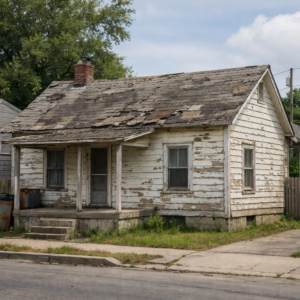
For a clean house in a strong location, the discount may be modest. For a property with deferred maintenance, water damage, title problems, or a tenant who is not paying, the gap between cash price and full market price can be wide.
What Changes The Offer Amount
Condition
Condition drives the first big adjustment. Cash buyers look at foundation movement, knob and tube wiring, old boilers, buried oil tanks, sewer issues, mold, and simple cosmetic wear.
A house in Verona that needs paint and floors is one thing. A house in Paterson with roof leaks, old siding, and an unfinished permit issue is another.
Location
Cash buyers study the block, the property type, and the resale pool. A renovated row house near PATH access in Journal Square attracts different buyers than a large ranch on septic in Sussex County.
New Jersey is local to the street level. Downtown Jersey City, the Heights, Nutley, Clifton, Teaneck, Maplewood, West Orange, and Sparta each trade on different numbers and timelines.
Layout And Property Type
A legal two family with separate utilities can support a stronger offer than a single family with an awkward layout. A small colonial with one bath may trade differently than a broad ranch, even on the same block.
Split levels in Bergen County, older colonials in Montclair, brick two families in Hudson County, and garden apartment conversions each carry their own renovation math.
Title, Occupancy, And Access
If the title is clear, the house is vacant, and the buyer can inspect it fully, the offer is usually stronger. If the property is inherited, tenant occupied, packed with contents, or tied up with missing paperwork, the buyer adds risk to the number.
If you are dealing with an estate, title companies will want Letters Testamentary, which are the court papers that confirm the executor’s authority, or Letters of Administration, which are the court papers appointing an administrator when there is no will. If that is your situation, start with A Cash Offer for an Inherited House in NJ, Explained and Can You Sell Before Probate Closes in New Jersey?.
How Real Cash Buyers Build The Number
Here is the basic framework a serious buyer uses:
- Step 1: Estimate what the house could sell for after renovation
- Step 2: Price the repairs with a real scope of work
- Step 3: Add carrying costs like taxes, insurance, utilities, and financing
- Step 4: Add closing costs, transfer costs, and resale expenses
- Step 5: Build in a margin for risk and profit
If any buyer skips those steps and gives you a number in two minutes, treat it carefully. You may be looking at a wholesaler who plans to tie up the property and assign the contract, not someone who will actually close.
That does not mean every wholesale offer is bad. It means you need to know exactly who is buying, how they arrived at the price, and whether they have proof of funds and a real path to closing.
What Sellers Miss When They Compare Cash Offers
The highest number is not always the best offer. In New Jersey, the fine print matters because attorney review, municipal requirements, certificates, occupancy issues, and title problems can all affect the closing.
A strong cash offer usually comes with clear terms, proof of funds, a realistic inspection plan, and a buyer who understands the town. A weak offer often starts high and gets cut later after inspection, permit checks, or contractor walk throughs.
If you want a good baseline before talking to buyers, get a local value opinion first through Home Valuation. If the house needs work, compare that with Sell a House That Needs Repairs in NJ Without Fixing It and Sell Your House As Is in NJ and Skip the Repairs.
When A Cash Offer Makes Sense
A cash sale can be the right move if the house needs major repairs, you have a short timeline, the property has problem tenants, or you do not want to clean it out and prep it for the market. It can also make sense when carrying costs are draining you each month.
It is common with inherited houses, divorce situations, relocation, and foreclosure pressure. If foreclosure is part of the picture, read Facing Foreclosure in NJ? You Still Have Options for a practical overview of how these sales are handled.
A retail listing often produces a higher gross price, but only if the house shows well, the town supports the number, and your timeline can absorb prep work, showings, inspection requests, and buyer financing. A direct cash sale trades some upside for certainty and speed.
When A Cash Offer Is Too Low
If the house is clean, in a strong commuter location, and only needs surface updates, a deep discount rarely makes sense. A well kept colonial near Midtown Direct rail service in South Orange or Montclair is different from a distressed shell with structural work.
The same is true for properties in tight inventory towns where buyers compete for solid houses. In places across Essex County and Bergen County, a smart listing strategy can beat a cash bid by a wide margin even after prep costs.
That is where Daniel’s approach matters. He is not locked into one lane. He can tell you if a direct sale is the better move, or if light cleanup, basic staging, and proper exposure will put more money in your pocket.
New Jersey Issues That Affect Cash Pricing
Every town has its own practical hurdles. Sellers often need municipal certificates before closing, and the requirements vary by municipality.
One town may require smoke and carbon certifications plus a continued certificate of occupancy. Another may add open permit questions, fire inspection items, or septic requirements.
Attorney review is also part of New Jersey contracts. That is the short period when attorneys can review and disapprove or modify the contract, which means a deal is not fully locked in the second you sign.
If the house is part of an estate, probate runs through the county Surrogate’s Court, and each of New Jersey’s 21 counties has its own process. For that side of the sale, see Probate Specialist Services and How Probate Homes Get Valued in New Jersey.
What Daniel Looks At Before He Tells You The Number
Daniel will usually sort the property into one of three buckets. First is a retail listing with little or no prep. Second is a listing after targeted work that adds value. Third is a direct cash sale where speed and simplicity matter more than top end price.
That choice depends on the roof, mechanicals, layout, location, access, title, contents, and your timeline. It also depends on the buyer pool in that town, because a two family in Union City moves on different logic than a large older house in Livingston or a lake area home in Sussex County.
He also looks at what kind of buyer is actually likely to close. Some investors want clean cosmetic deals. Others will take foundation issues, probate complexity, or heavy cleanouts if the numbers work.
How To Protect Yourself Before You Sign
- Ask how the buyer arrived at the number.
- Ask whether they plan to close themselves or assign the contract.
- Ask for proof of funds.
- Ask what inspections they want and when.
- Ask what happens if municipal issues or title problems show up.
- Compare the cash offer to a realistic as is listing strategy.
If the answers are vague, the offer probably is too. A real buyer or a seasoned adviser should be able to explain the math in plain English.
[idx-listings linkid=”NJ New Listings” propertytypes=”” showlargerphotos=”true”]
This article is general information about New Jersey real estate practice, not legal or tax advice. If your situation involves probate, inheritance, foreclosure, liens, or taxes, speak with a licensed New Jersey attorney or tax professional about your specific circumstances and confirm current requirements with the proper court, municipality, or state agency.
Talk To Daniel About Your House And Your Options
If you want to know what cash buyers would actually pay for your New Jersey house, Daniel Mesrobian can give you a straight answer and the reasoning behind it. He can also tell you if a better route is an as is listing, a light renovation plan, or a direct investor sale.
Call Daniel at 201.317.8670 or visit soldinnewjersey.com to request a cash offer with no cleaning, no repairs, and no showings. If you want options instead of pressure, that is the conversation he has every day.