
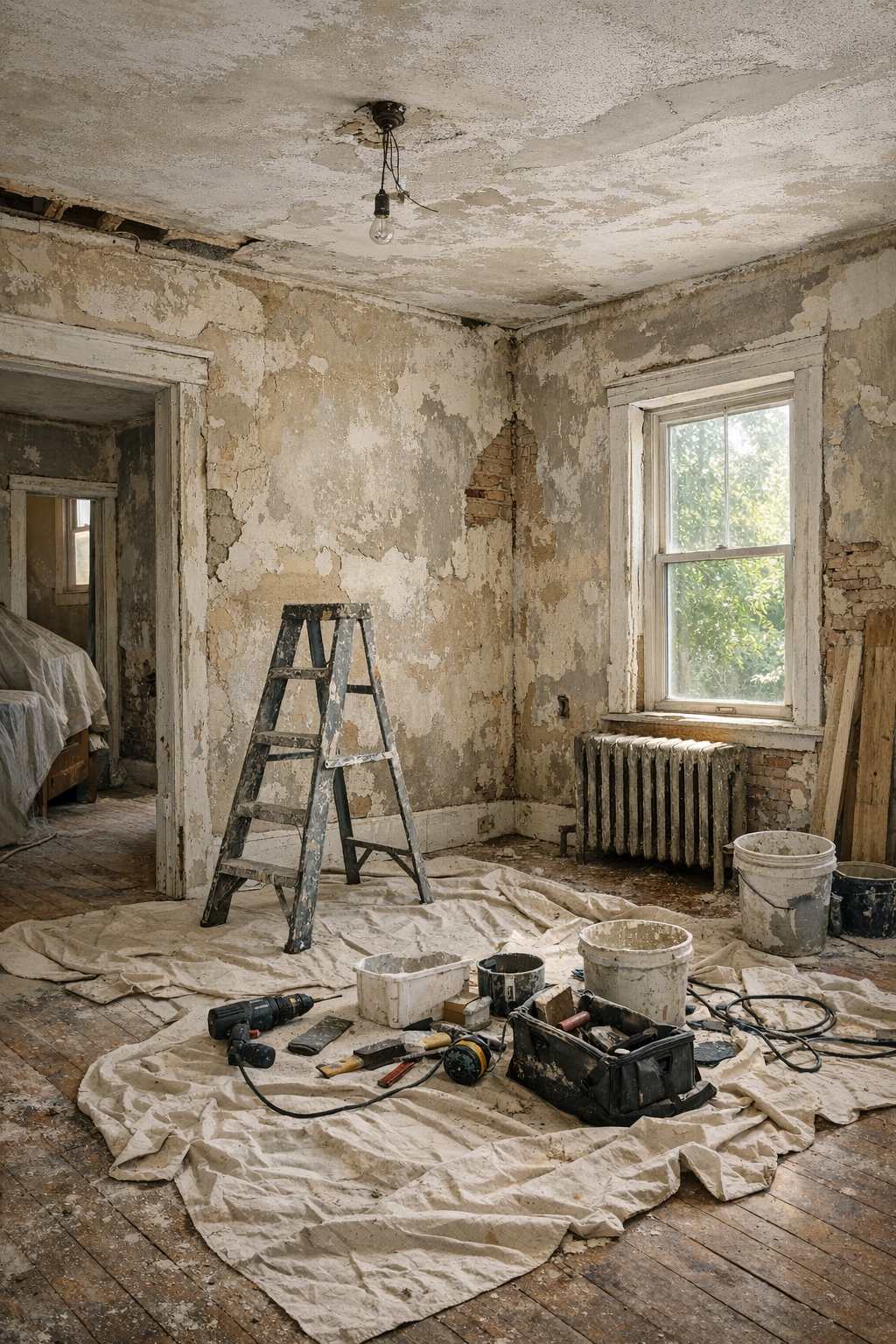
Your Inherited NJ House Needs Work. Now What?
If your inherited house needs repairs in new jersey, you are probably dealing with two problems at once. You have a property with real issues, and you have an estate process that may still be unfolding through the county Surrogate’s Court.
You do not need to solve everything in one week. You need a clear order of operations, a realistic value range, and a plan that fits the condition of the house, the estate timeline, and the people involved.
I am Daniel Mesrobian of soldinnewjersey.com, a Montclair based Realtor with eXp Realty and a real estate investor with more than 18 years in New Jersey real estate. Much of my work is helping executors, administrators, and adult children sort out houses in Essex, Hudson, Bergen, Morris, Passaic, Sussex, and Union counties when the property has deferred maintenance, contents still inside, or decisions that no one wants to make alone.
[idx-listings linkid=”NJ Featured Listings” propertytypes=”” showlargerphotos=”true”]
Inherited House Needs Repairs In New Jersey: Start Here
First, figure out whether you have the authority to act. If there is a will, the named executor receives Letters Testamentary, which are the court papers that confirm authority to handle the estate. If there is no will, the court appoints an administrator who receives Letters of Administration, which serve the same purpose.
Title companies usually need those letters before a sale can close. If you are still waiting on them, you can still gather information, secure the property, line up cleanout help, and prepare a value strategy. I cover that in more detail here: Letters Testamentary In NJ And Why Your Sale Waits On It and Letters Of Administration NJ When There Is No Will.
Next, protect the house. Change locks if needed, confirm utilities, remove obvious hazards, and check insurance with the carrier. A vacant inherited house in Clifton, Bloomfield, Jersey City Heights, or Vernon can develop new problems fast if no one is watching it.
Do Not Repair First Just Because Someone Told You To
A lot of heirs assume they must renovate before selling. That is not always the best move. Some houses need basic cleanup and a sharp listing strategy. Some need a cash sale as is. Some justify targeted work because the layout, location, and buyer pool support it.
The right answer depends on the house and the town. A dated colonial near Upper Montclair train access is a different project from a worn two family in Union City or a ranch in Morris Plains with original mechanicals and a full cleanout ahead.
Before you spend money, get a real condition based valuation. This is where many estates lose value. They either underprice the property because it looks rough, or they overimprove it and create delay, stress, and bills the estate did not need.
Your Three Main Options
Sell As Is For Speed And Simplicity
This route works when the house has major deferred maintenance, a full contents cleanout, old roof, old electric, or a kitchen and baths that are decades behind. It also makes sense when heirs live out of state or do not want to manage contractors.
As is means you sell the property in its current condition. It does not remove your obligation to make appropriate disclosures about what you know, and your attorney should advise you on the contract language for your situation.
Do A Limited Pre Sale Refresh
This usually means trash out, deep cleaning, basic landscaping, paint, floor refinishing if the condition supports it, and removing furniture that makes the rooms feel smaller. In many New Jersey towns, this level of work can improve presentation without turning the estate into a renovation business.
If the house is in Verona, Nutley, Ridgewood, or Summit, simple presentation work may be enough to attract strong interest if the bones are good. The goal is not perfection. The goal is to help buyers see the space clearly.
Renovate Before Listing
This is the most demanding option and the one I tell many executors to avoid unless the numbers and logistics make sense. Full renovation means carrying costs, permit issues, contractor management, town inspections, and more chances for family disagreement.
It can work in the right case. It can also turn a manageable estate sale into six months of friction. If you are considering that path, you need a hard look at after repair value, scope, timeline, and municipal requirements in that town.
What Repairs Matter Most To Buyers In New Jersey
Buyers usually react hardest to the systems they cannot ignore. That includes roof condition, foundation cracks, water intrusion, outdated electric panels, heating issues, old plumbing, and signs of neglected exterior maintenance.
Cosmetic problems are easier to price around. A house in West Orange with old wallpaper and worn carpet may still sell well if the layout works and the major systems are sound. A house with knob and tube wiring, an active leak, and peeling exterior trim will narrow the buyer pool fast.
- Water issues in basements or around foundations
- Roof age and visible leaks
- Electrical service and panel condition
- Heating system age and function
- Plumbing leaks or old supply lines
- Unsafe stairs, railings, or trip hazards
- Town required certificates or smoke and carbon items
Most towns require municipal certificates before closing, but the exact list varies. One town may focus on smoke and carbon certification, another may require a continued certificate of occupancy, and another may have local inspection steps. Always confirm with the municipality.
How Probate And Repairs Intersect
Probate is the court process for recognizing the person who has authority to handle the estate. In New Jersey, that process runs through the Surrogate’s Office in the county where the decedent lived, such as Essex County Surrogate’s Court, Bergen County Surrogate’s Court, or Morris County Surrogate’s Court.
You can often prepare the sale before probate is fully wrapped up, but details matter. If you want a plain English overview, read The NJ Surrogate Court Process, Explained In Plain English and Can You Sell Before Probate Closes In New Jersey?.
If the house needs work, waiting for every estate issue to resolve before getting valuation guidance usually wastes time. You can start with condition photos, a walk through, contractor opinions if needed, and a sale strategy tied to the estate’s likely timeline. You just do not close without proper authority and title clearance.
How To Price A House That Needs Work
You need two numbers, not one. The first is likely value in current condition. The second is likely value after sensible improvements. The spread between those numbers helps you decide whether repairs are worth the trouble.
This is where local knowledge matters. A split level in Paramus, a two family in Bayonne, and a cape in Livingston do not attract the same buyers or reward the same repair budget. Even within one county, the strategy changes block by block and town by town.
For a deeper look at valuation in estate sales, see How Probate Homes Get Valued In New Jersey and Essex County Probate Homes And What They Really Sell For.
Watch The Cleanout Before You Throw Away Money
The fastest way to lose value is to clear the house in a rush and toss items that should have been sold, donated with records, or reviewed by the family first. Executors are often under pressure, and that pressure leads to expensive mistakes.
Walk the house once for documents, once for personal property with emotional value, and once for actual trash. Then decide what stays for the sale, what gets removed, and what needs specialist handling. This guide may help: Probate House Cleanout In NJ Without Throwing Away Value.
Taxes, Basis, And Other Questions You Should Flag Early
Inherited property usually gets a stepped up basis, which means the property’s tax basis is generally adjusted to its value at the date of death. That can affect capital gains if the house is sold later for more. Your tax professional should review the facts for your case.
New Jersey no longer has an estate tax, but it still has an inheritance tax that depends on the heir’s relationship to the deceased, with close family generally exempt. There can also be waiver issues that affect closing. Confirm current requirements with your attorney, tax professional, the New Jersey Division of Taxation, and the county Surrogate’s Office.
For related reading, see Stepped Up Basis Explained Before You Sell That NJ Home.
If Siblings Disagree, Slow Down And Get The Facts First
One person wants to renovate. One wants a cash sale. One wants to keep the house. That is common. Most of these disputes get worse because nobody starts with the same information.
Get the current condition value, likely repaired value, expected carrying costs, and a rough timeline for each option. Then the conversation becomes practical. If that is your situation, this may help: When Siblings Disagree About Selling The Inherited House.
What I Actually Help With
I do not approach inherited houses like a standard listing appointment. I help you sort the property, the timing, the likely buyer pool, the repair threshold, and whether an as is sale, a market listing, or a light pre sale refresh makes the most sense.
I also work with cash buyers and investors, and I manage renovation projects when that path is justified. That matters because I can show you the tradeoffs in plain terms instead of pushing one answer for every house. If you want a broader overview, start here: Probate Specialist Services.
[idx-listings linkid=”NJ New Listings” propertytypes=”” showlargerphotos=”true”]
This article is general information about New Jersey real estate practice, not legal or tax advice. Probate, inheritance, title, and tax issues depend on your specific facts. Please consult a licensed New Jersey attorney or tax professional about your circumstances.
Talk To Daniel About The House Before You Decide What To Fix
If you inherited a house in Essex, Hudson, Bergen, Morris, Passaic, Sussex, or Union County and you are not sure whether to repair it, clean it out, list it, or sell it as is, call me directly. We can have a confidential, no obligation conversation about the property’s condition, the estate’s timeline, and the best next step.
I can start helping with valuation and sale strategy before the letters are even issued, so you are not stuck waiting to get organized. Reach me at 201.317.8670 or visit soldinnewjersey.com.